
EXECUTIVE INTERVIEWS > PUBLIC SECTOR
An NGO which is changing lives
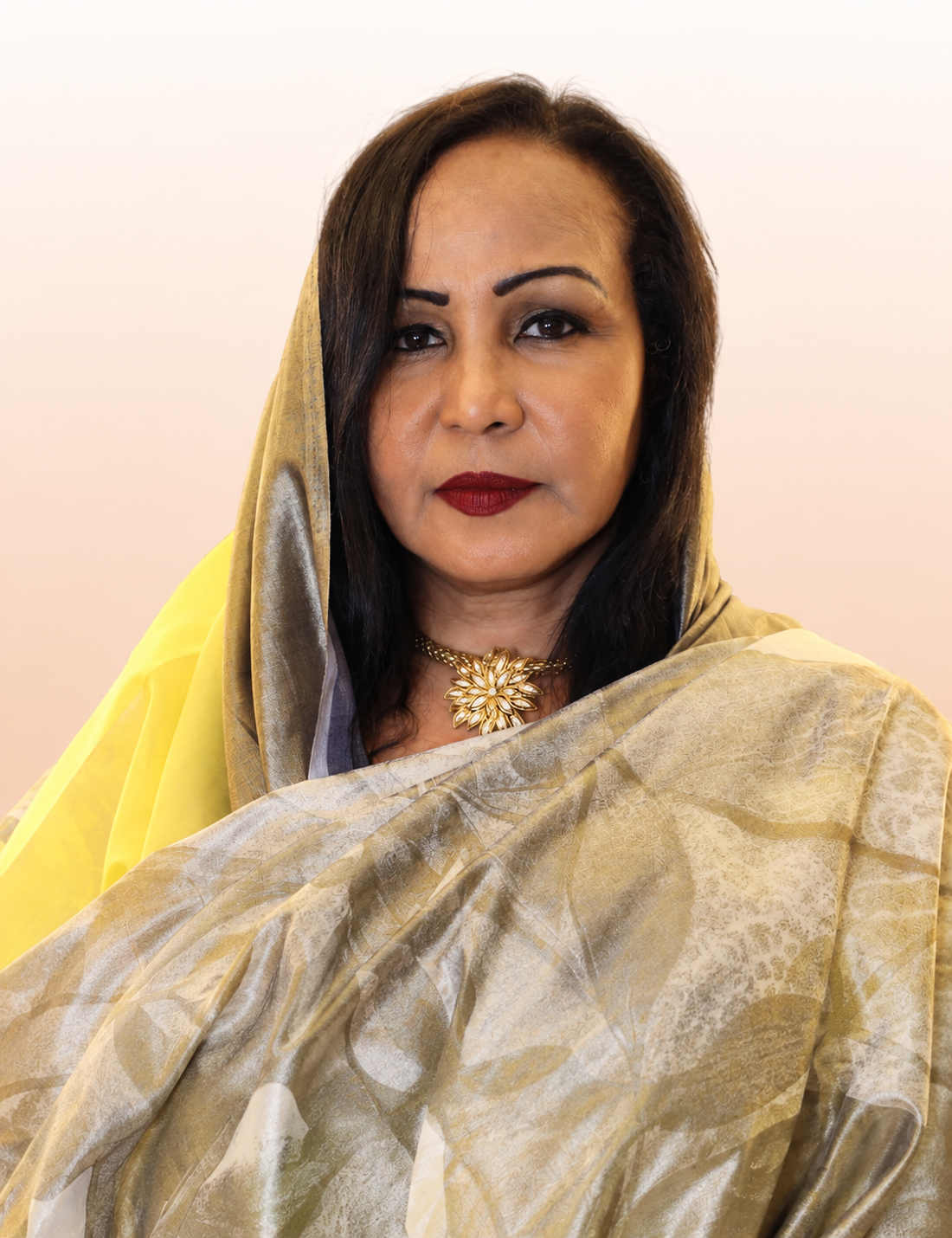
We interview Bakinam Rahama, Co- founder of NGO A Drop of Water which helps provide water to rural areas in Sudan.
The idea of a drop of water started when myself and friends were visiting the Al- Fateh area, west of Omdurman, with the intention of providing charity in respect to the memory of my late grandmother. After examining the conditions of the residents and their suffering in obtaining potable water, the idea of establishing the organization was born. After organizing ourselves, with many discussions and three and a half years, we registered the organization.
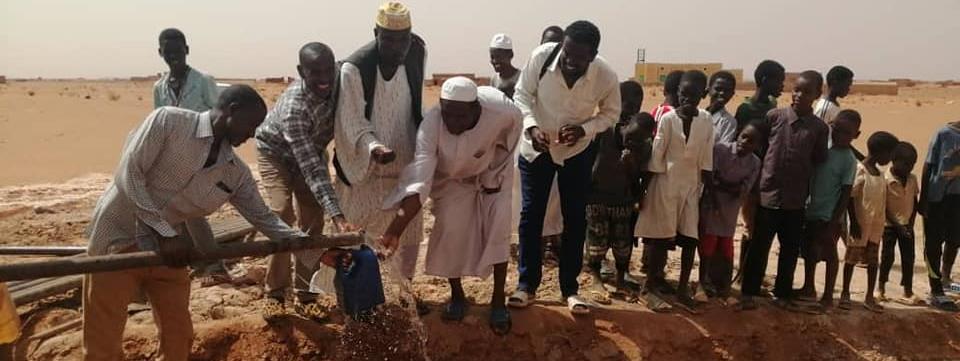
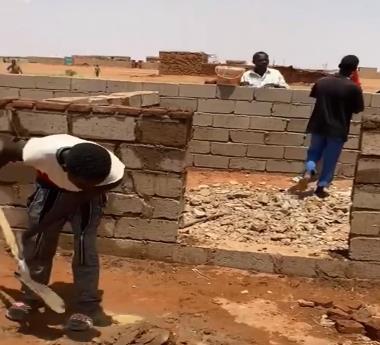
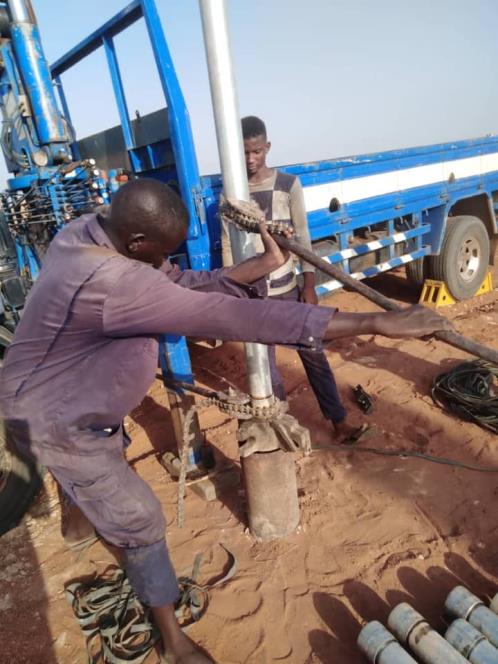
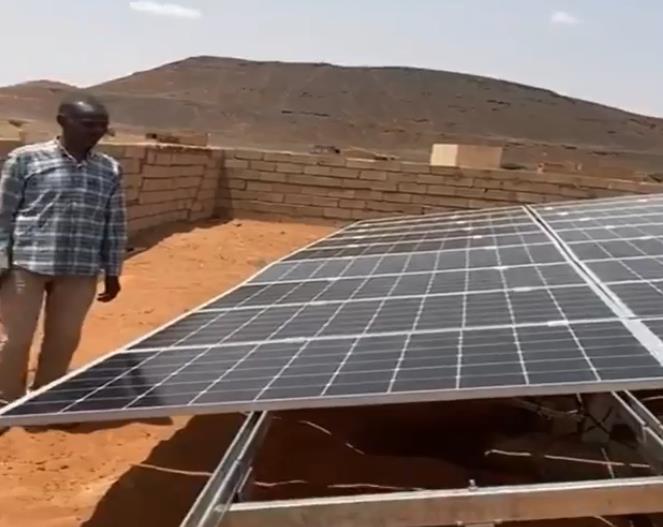
The Al-Fateh area, was developed by our organization. Its population is about 500,000 people who are distributed over four villages. We designed and built water networks which were connected to their homes. We managed the excavation, drilling of wells, and eventually powered the network with solar panels. This also resulted in the urbanization of the area, creating easy access to water, which was used for the production of cement blocks for the construction of service sites, fencing and afforestation of the area. Indeed, the organization had a strong impact on its projects in the region, thus creating jobs.
The rich savanna belt of Sudan is famous for its abundance of rain in the autumn season. There is a weakness in utilizing rainwater because there are no storage facilities in remote areas and most of the storage methods are porous earth pits, hence the dams or the walls and base leak, which causes a lot of wasted water hence scarcity thus thirst. It is possible to take advantage of the flood by building concrete dams to collect water and fencing it with tall trees to reduce evaporation. arise that require the organization’s intervention and the scarcity of resources is an obstacle to spread, especially since the organization is still dependant on donations and subscriptions from members. There are “It is possible to take advantage of the flood by building concrete dams to collect the water and fencing it with tall trees to reduce evaporation” While the water of the Nile flood can be used as a storage terminal with tributaries which can be excavated transporting water outside the course of the Nile to irrigate forests and farms.
The challenges facing the organization are expanding into other affected areas. Whenever a project is completed, cases no continuous or sustainable donations where proceeds are spent on the implementation of the activities of the organization.
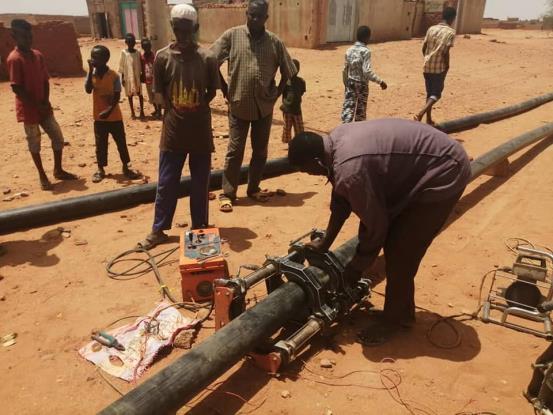
There is one factory in Sudan that works with qualified specifications to some extent and uses imported raw materials of plastic. Majority of the equipment and material are unavailable locally and imported. Sudan needs to establish infrastructure projects that keep pace with the development and increase in the population, specifically to the availability of water and its services from sanitation to other uses. The organization depends and works with local suppliers, recognizing the financial burden in importing foreign products, hence advises local production to be implemented.
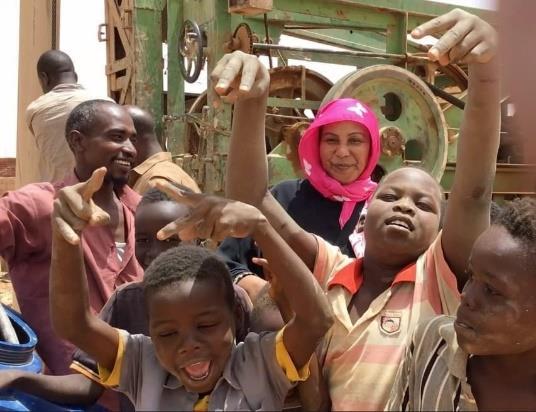
My message to the authorities is to facilitate the tasks of NGOs because we are the real support in the renaissance and development of our country, this can be done via exempting bureaucracy and relaxing the rules rather than allowing for unregulated activities which are counter productive. Such changes can allow new projects and raising finance a reality. A message to other NGOs, our roles are complementary amongst us, especially as they do not seek to profit, but rather the goal is to develop societies and advance the country through humanitarian initiatives, so you should not spare an effort without contributing by exchanging ideas and working with each other when activities have synergies. Together we can manage all these projects. A message to the Sudanese public who need access to water, you are the basis of development, and without you, society does not exist, therefore, your gains and implemented projects must be preserved and together we need to work to develop and protect them so that all of us and future generations enjoy high standards and sustainable community services joining other developed countries.
Sudan Business Magazine
Featured In: Sudan Business Magazine | Issue: September 2020
Water is a universal necessity, yet access to it remains one of the most pressing challenges of our time. This issue is particularly acute in Sudan, where seasonal floods clash with prolonged periods of water scarcity. In this exclusive interview for the September 2020 cover story of Sudan Business magazine, we sit down with Bakinam Rahama, the visionary NGO Co-Founder whose organization is dedicated to pioneering community-based solutions for water access.
Featured alongside the headline “A DROP OF WATER” and a clear water droplet, her presence on the cover provides a necessary focus on a core, foundational resource essential for both humanitarian stability and subsequent economic growth. We met with Ms. Rahama to discuss how her organization balances crisis response—such as the recent flooding—with long-term infrastructure development, and to explore her vision for a future where clean water is a foundation, not a barrier, for all Sudanese.
Sudan Business: Bakinam, thank you for joining us as this month’s cover feature. The theme “A DROP OF WATER” is deceptively simple for a problem so complex. What is your vision for how this conversation can change the landscape?
Rahama: Thank you for this platform. We chose the metaphor of a single drop of water because it represents potential. While Sudan faces overwhelming climate and economic pressures, real change starts small. Our vision is that every drop of water, managed sustainably at the community level, can become a foundation for health, education, and eventually, the very commerce that this magazine champions. The drop is not a symbol of despair, but a promise of renewal if we manage it correctly.
Sudan Business: Your work as a Co-Founder places you at the intersection of immediate aid and long-term planning. How does your organization specifically approach these dual responsibilities?
Rahama: We believe in sustainable implementation, not just emergency relief. A truly open and thriving economy relies on stable foundational services. While we provide emergency purification kits, our primary focus is engineering and restoring reliable community water access points (like modernizing traditional wells or implementing small-scale solar pumping stations). We train local communities to maintain these systems themselves. If we want Sudanese families to participate in the economy effectively, we must first ensure their core physiological infrastructure is secure and that they have expert hands locally to manage it.
Sudan Business: The cover of this issue also highlights a special report on “International Support for Flood Victims.” How do you reconcile massive flood events with your central message about water access and conservation?
Rahama: It is the great paradox of our region. The same rivers that can inundate farmland and homes also contain the key to our survival. The current flood crisis is devastating, and international aid is critical to addressing immediate human suffering. However, we cannot rely solely on crisis management. Our organization uses data from the Central Bank of Sudan and our own field assessments to understand these systemic trade statistics—not just of wealth, but of resources. True opening of the economy means using this climate data and international support to build comprehensive, national-level flood mitigation and water storage infrastructure that captures this water for the dry seasons.
Sudan Business: This issue also discusses “Gum Arabic: Market Shakers.” How does stable water management at the community level impact a high-value commodity sector like that?
Rahama: This is a perfect example of why this discussion is essential for Sudan Business. Gum Arabic is one of our country’s most vital agricultural exports. The Acacia trees that produce it depend entirely on a healthy water table and consistent precipitation, which is increasingly disrupted. Furthermore, the communities that harvest the gum are often in arid or semi-arid zones. Secure, accessible water for those communities is the backbone of that supply chain. You cannot shake any market if the foundation (the people and their environment) are thirsty. Sustainable water access enables a stable workforce and protects the long-term health of the trees.
Sudan Business: Your focus is on local community empowerment. Why do you believe that a “keeping it local” approach, especially with external funding, is essential for Sudan’s progress?
Rahama: We must prioritize local knowledge and domestic value addition. This applies to economic sectors like peanut processing, and it applies even more to a foundational resource like water. You cannot truly secure a country’s water future by importing alien solutions or foreign teams that leave. Real innovation must be original. We partner with international bodies for the necessary capital and technical support, but the implementation and the leadership must be Sudanese. We focus on differentiation—finding unique solutions for the specific hydrologic realities of different states, and ensuring local people are trained in the disruptive thinking that ensures these solutions last. Copying might provide short-term relief, but only sustainable, locally-owned innovation builds a resilient ecosystem.
Sudan Business: Bakinam, looking forward, what is your ultimately goal for your organization, and your vision for Sudan’s water future?
Rahama: My goal is to see our NGO become redundant. We don’t just want to be an aid provider; we aim to be an essential, strategic operational partner to the state. We support the businesses, hospitals, universities, and commercial hubs that depend on us. My ultimate vision for Sudan is a nation where every household has clean, accessible water—not as a fleeting achievement, but as a permanent, systemic right. The water drop on this cover is just the beginning of that essential conversation. We must work collaboratively to ensure that a secure water infrastructure becomes the engine of Sudan’s eventual economic and social transformation.