
EXECUTIVE INTERVIEWS > PUBLIC SECTOR
Changing farming in Sudan

Hassan Moawia, General Manager at Xenon Agricultural Services, tells us more about how their business is adding value to farmers and farming at large in Sudan.
Xenon International Investment Company was incorporated in 2012 mainly as an agricultural investment company managing its own farmland growing cotton, sesame, rice, peanuts, animal feed and vegetables for the local market. Earlier this year Xenon Agricultural Services was established to provide all the necessary support services required from soil preparation all the way to cultivation using high-end machinery and implements that are efficient and more environmentally friendly that form the basis for good soil preparation which in turn results in good seed germination and the subsequent crop growth and better yields. Our choice for choosing the farming sector was simply to capitalize on Sudan’s vast arable land which will be the main driving economical force with an unlimited potential of growth in the years to come not to mention the scarcity in the availability of high-end machinery and equipment that can cater for the mid – large size plantations efficiently.
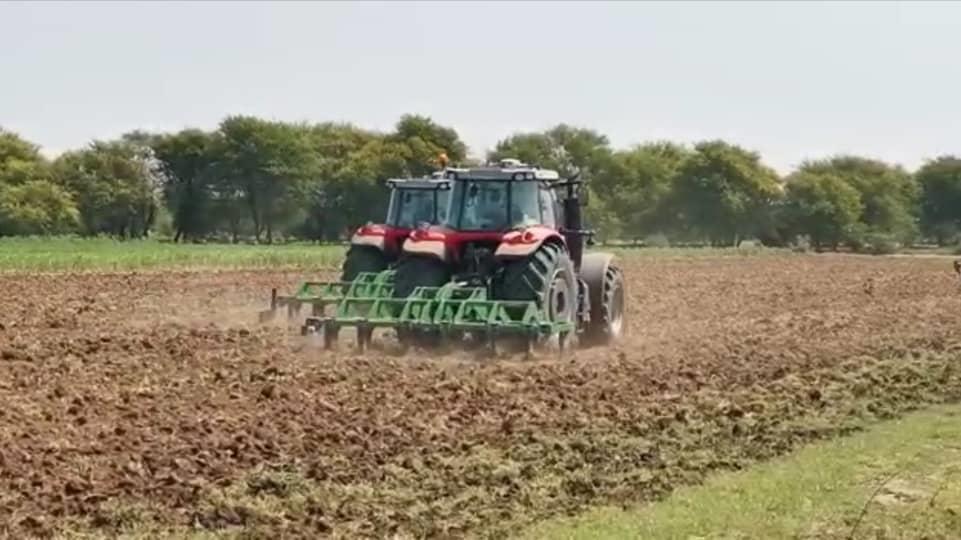
Well in the meantime, we are currently providing tillage services which comprise of chisel ploughing and disc harrowing and we are in the process of expanding our services and machinery to include land laser leveling equipment, planters, pesticide and fertilizer sprayers, Hay & Forage harvesting equipment in addition to the various combine harvesters needed to meet our clients’ demands. Apart from the services mentioned above, we are also exploring opportunities in providing smart partnerships directly with the farmers by offering micro financing to cover all or part of their farming operations which is expected to give us a marketing advantage and boost the business further for a bigger market share.
It must be said that farming equipment in general is very costly, not to mention the preventive/corrective maintenance and operation costs involved, especially when we talk about large modern machinery that for sure will not be feasible for the typical farmer to own as they do require quite a large capital investment that can run in the tens and even the hundreds of thousands of dollars. Hence, most would prefer to contract such services that would provide modern agricultural methods and techniques that give better yields and at the same time benefit from cost savings on the high labor costs and time consumed associated with the traditional methods that were used in the past. “ We are also exploring opportunities in providing smart partnerships directly with the farmers by offering micro financing to cover all or part of their farming operations “
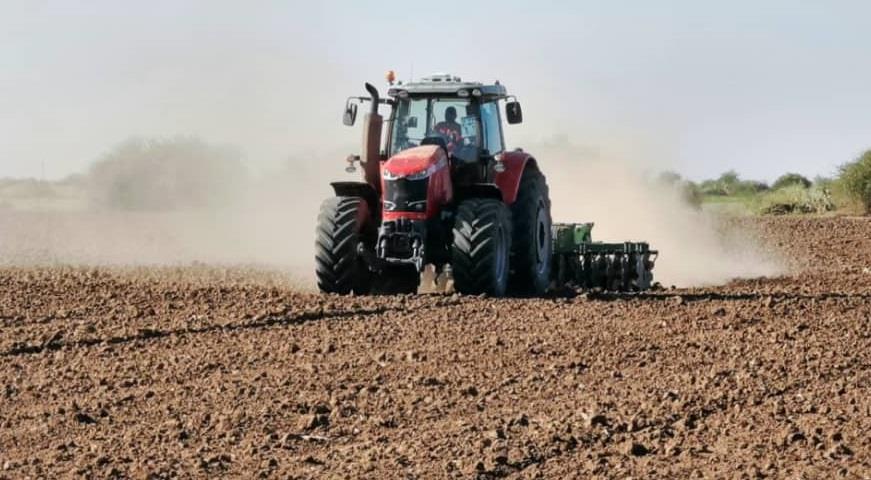
Innovation is more important in modern agriculture than ever before. The rising costs of supplies, shortage of labor, and changes in consumer preferences for transparency and sustainability in last 10 years has led the major agricultural equipment suppliers to seek solutions for these challenges. New advancements in farming technologies ranging from robotics, harvest automation, autonomous tractors, seeding and weeding, and drones to computer vision software are most commonly being utilized in modern agriculture. Unfortunately, many of these new technologies and advancements are not yet common in Sudan, as a result of the long-imposed US sanctions that was “ restricting agricultural development in the country. But now that these sanctions have been lifted, we are optimistic that Sudan will witness a boom in this area and all the new technologies will be introduced in the near future. With that being said, from the start we were very selective in our choice of tractors ensuring they are GPS ready and equipped with state-of-the-art technology to cope with such advancements and that our implements have the lowest environmental footprint on the soil that would result in the best yields.
Just like any other business, we face a number of challenges that can be summarized in the following points: – Farmers lack of awareness of the modern agriculture techniques and available technologies leads many farmers to be resistant to any change from their traditional farming methods. – The shortage of skilled technicians and equipment operators. – The continuous devaluation of the Sudanese Pound against the US Dollar/Euro resulting in higher operational cost which in turn affects negatively on service costs. – Current shortages in diesel fuel, which we hope are just temporary. With all that being said, the future for the agriculture sector in general in Sudan looks bright as Sudan is expected to be a major player in the international market in the years to come, so I would like to take this opportunity to invite all those local and foreign investors seeking to go big to join us in investing in this important sector which has unlimited potential. We will always be there to serve you.
Sudan Business Magazine