
EXECUTIVE INTERVIEWS > PUBLIC SECTOR
SOLAR POWER AROUND THE CLOCK

Mohamed Mukhtar and Tarek Malzer, founders and directors of Empower Renewable Energy, attended university together at the University of Southampton in the UK where Mohamed graduated with a Master’s in Electrical Engineering and Tarek graduated with a Master’s in Risk and Finance.
Following university, Mohamed worked at RINA S.p.A., an engineering consultancy and Tarek worked at Schlumberger and Capita Plc. In 2017, after starting their business in Sudan remotely from the UK, delivering consultancy and engineering services, the two moved to Sudan permanently to pursue their start-up full-time and registered Empower Renewable Energy Company, the first dedicated renewable energy company in Sudan’s history. Mohamed and Tarek currently manage Empower and sit on the board as Technical
and Commercial Directors respectively. Since founding, they have managed to grow Empower from a start-up made up of two founders to a medium-size enterprise of more than 50 permanent comprising departments such as sales and design, project engineering, project management, technical support, and logistics in addition to establishing a network of tens of agents, distributors, and subcontractors across twelve of Sudan’s 17 states.
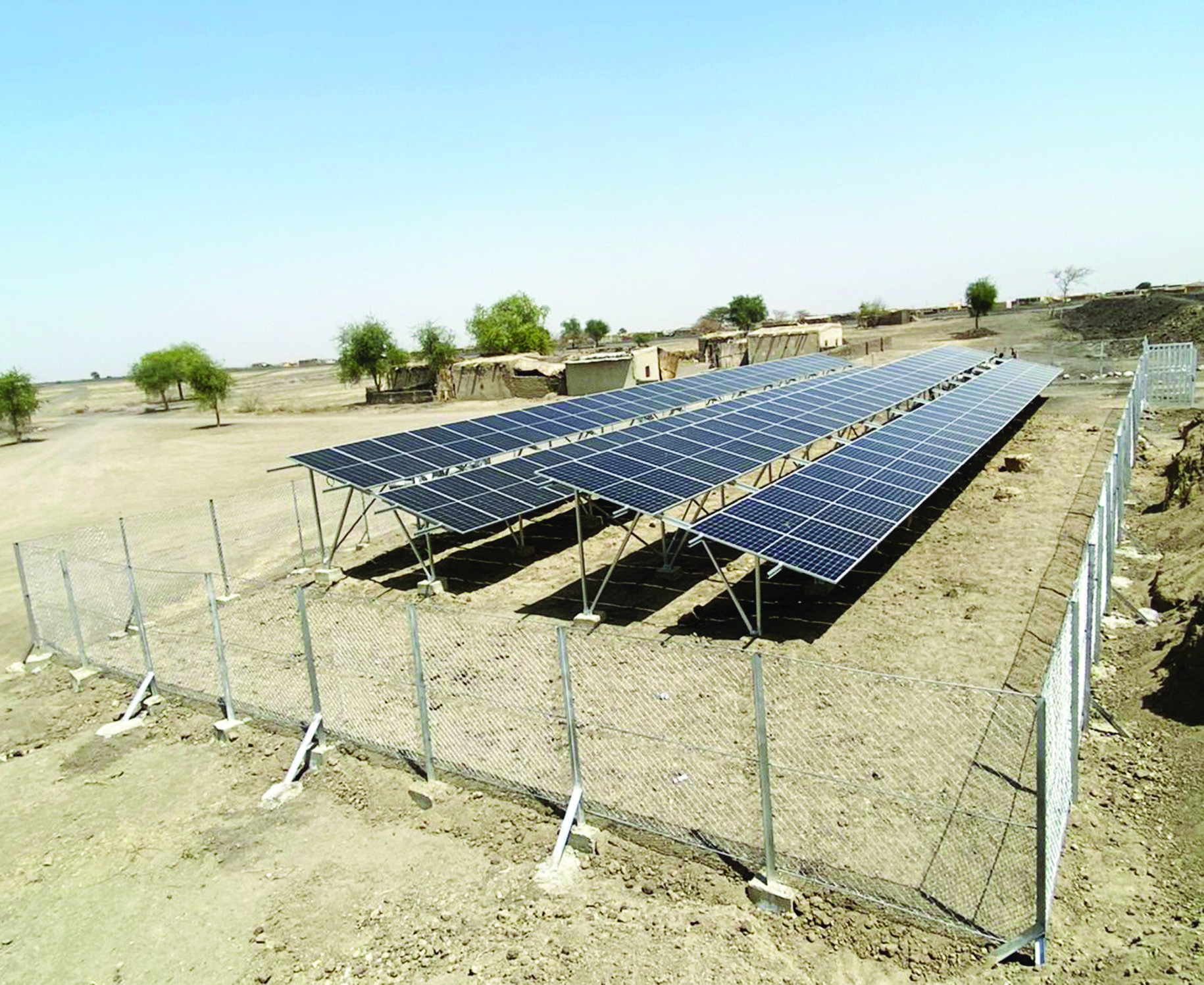
We first began as a start-up in 2016 when we decided to take a leap of faith and capitalize on our expertise in engineering and finance to provide consultancy and advisory services to residential, commercial, agricultural, and industrial clientele in Sudan. Our services Mohamed Mukhtar and Tarek Malzer, founders and directors of Empower Renewable Energy, attended university together at the University of Southampton in the UK where Mohamed graduated with a Master’s in Electrical Engineering and Tarek graduated with a Master’s in Risk and Finance. F OLLOWING university, Mohamed worked at RINA S.p.A., an engineering consultancy and Tarek worked at Schlumberger and Capita Plc. In 2017, after starting their business in Sudan remotely from the UK, delivering consultancy and engineering services, the two moved to Sudan permanently to pursue their start-up full-time and registered Empower Renewable Energy Company, the first dedicated renewable energy company in Sudan’s history. Mohamed and Tarek currently manage Empower and sit on the board as Technical and Commercial Directors respectively. Since founding, they have managed to grow Empower from a start-up made up of two founders to a medium-size enterprise of more than 50 permanent comprising departments such as sales and design, project engineering, project management, technical support, and logistics in addition to establishing a network of tens of agents, distributors, and subcontractors across twelve of Sudan’s 17 states. were first centered around a choice of specialized investment and engineering studies analyzing financial and technical feasibility of renewable energy projects from different angles on behalf of stakeholders considering developing solar power plants. This led to a steady rise in Engineering, Procurement and Construction (EPC) enquiries for renewable power plants, particularly solar in off-grid areas. We delivered Empower’s first turnkey EPC project, which was for an agriculture irrigation system, in 2017. We then decided to establish an in-house dedicated EPC team to cater to this steadily increasing number of enquiries driven by the sudden scarcity and rising cost of fuel. We registered the Empower trademark in 2017 and went on to raise investment in 2018. That year we expanded the business to incorporate the procurement, supply, and authorized distribution of some of the most renowned renewable equipment brands worldwide. In 2019, we assembled a Business Development team comprising design, sales andengineering experts and re- established our mission to the pursuit of sustainable, innovative, and impactful projects. We have since 2019 adopted but hospitable approach to local, regional and global partnerships to realize this mission through strategic partnerships with NGO’s, DFI’s (Development Finance Institutions), climate funds, and a host of local and international private-sector stakeholders.

Over six years, we have delivered several thousand tailored proposals and presentations. We learned through this experience that no two clients are the same and no two projects are the same. The key to delivering convincing and persuasive proposals, is transparency, integrity, and dedication. Transparency is key because every customer, large or small, deserves to understand their investment before deciding, especially when it comes to a long-term investment in a renewable energy solution. We therefore openly present financial, environmental, and technical factors to all potential off-takers so they are able to determine, with absolute confidence, the right solution for them. Integrity is a core principle at Empower that forms our strong bonds with our customers, partners, and stakeholders. We value the trust placed in us as an organization and in return we place the customer’s benefit, first and foremost. We demonstrate our dedication to advancing our customers interests, fighting climate change and positively impacting communities by proudly being the only renewable energy company in the country with a dedicated 24/7 technical support team for solar systems as well as an operations and maintenance team conducting scheduled preventative maintenance visits cleaning panels and testing equipment all year round. In addition, we utilize real-time monitoring solutions, allowing us and our customers to monitor system performance, record environmental impact over time in the form of tonnes of CO2 saved and trees planted. It is this level of dedication that demonstrates our undeniable goal of helping our customers, communities, and the environment to benefit from every single kWh of clean, cheap energy.
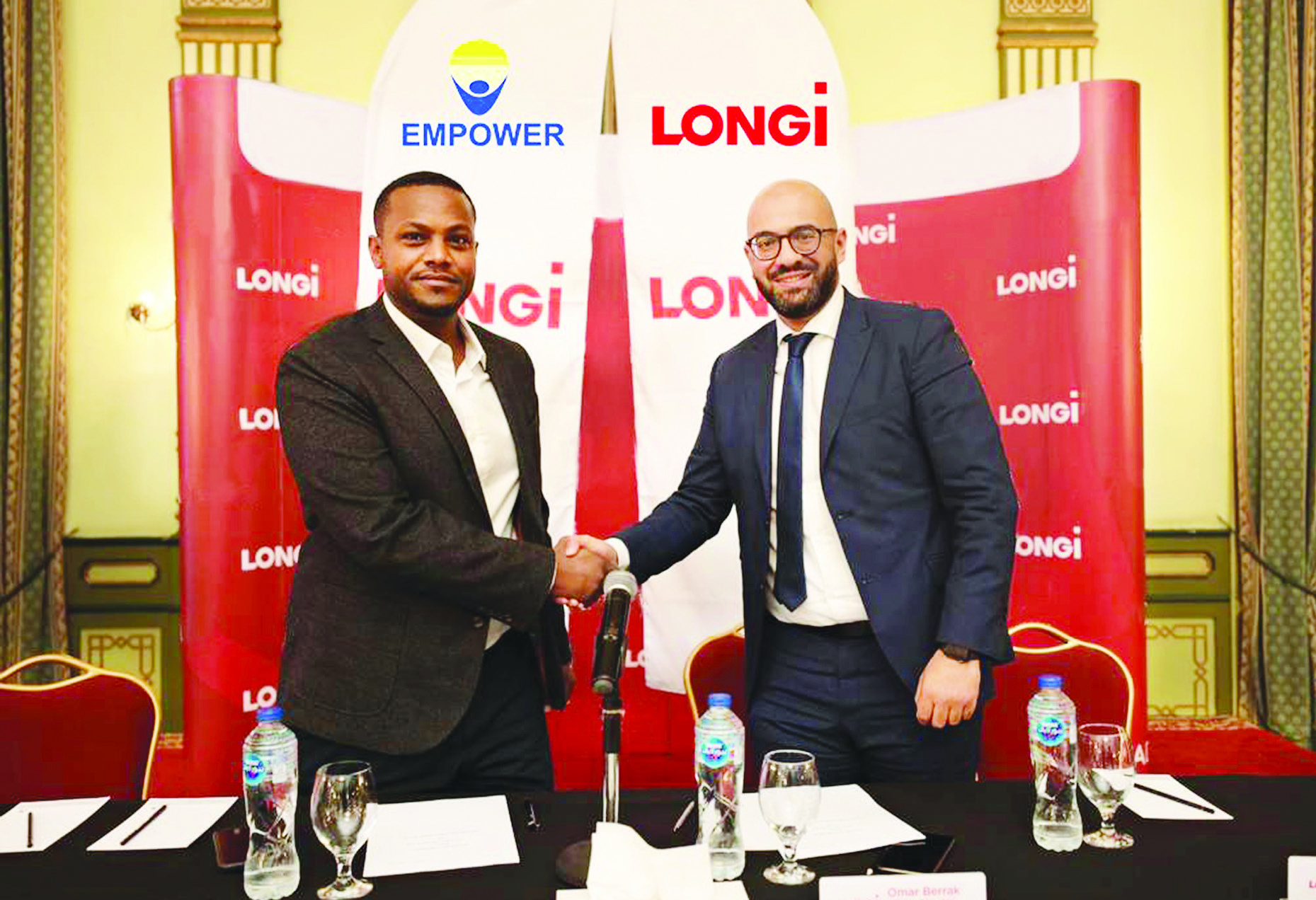
LONGi is the largest manufacturer of solar PV modules worldwide and, unlike other global manufacturers, is taking a new approach in Africa. Most global manufacturers continue to center their strategic R&D and manufacturing goals around the large, utility-scale opportunities by focusing only on developing modules fit for a multi-megawatt power plant. However, LONGi places importance on the small- scale, big-volume solutions across Africa by developing and introducing products tailored to markets like Sudan. For example, LONGi recently introduced the 54 and 66-cell fifth-generation modules that have the same cell efficiency as their largest modules in production but comprise less cells and hence more compact dimensions and flexible configurations, features that are ideal for smaller residential and irrigation solar systems which make up the majority of the applications in the Sudanese market. This diversification clearly demonstrates LONGi’s strong commitment to the Sudanese market and other markets in Africa. We are proud and excited to be LONGi’s official partner and we look forward to delivering more innovative and effective solutions and to accelerating the adoption of renewable energy solutions in Sudan as we continue this journey together.
Affordability is key to accelerating the adoption of renewables and to achieving universal access. We have witnessed tremendous progress toward affordability over the past decade as the price of the average residential solar system dropped by more than 60% driven by larger, more efficient manufacturing facilities, expanded R&D and technological advances. However, the price per watt-peak (the unit measure of a solar module’s power capacity) has gone up year-on-year since 2020 as financial turbulence spurred by the COVID-19 pandemic, supply chain crises, and rising inflation drove up the cost of production and raw materials. Affordability of renewable energy solutions therefore cannot be achieved in the next few years simply by reducing costs, but instead by integrating financial services and technology (“fintech”) and introducing flexible payment plans across renewable solutions markets. For instance, small solar systems can be made affordable through a Pay-As-You- Go model whereby users can top-up and unlock their device periodically as they use it on a daily, weekly, or monthly basis. The supplier reduces default risk by remotely switching off the device once payment is due and collecting payment from users in rural areas through airtime or mobile money. A numerical unlock code is sent to the user via SMS who then enters he code into the digital screen of his solar system unlocking it once again. Once the user has fully paid off the cost of the system, a final unlock code is sent which permanently unlocks the device and ownership is transferred. This is just one example of many creative solutions that use fintech to overcome the issue of affordability.
Yes, there are many government policies that can be implemented to accelerate energy transition in Sudan. First, we see that a centralized distribution company, namely the Sudanese Electricity Distribution Company (SEDC), should be, in our opinion, broken up into regional distribution network operators. An exercise which has proven to be effective in many countries around the world. Geographically structured independent network operators are certain to demonstrate more streamlined and informed decision-making as well as more flexibility to introduce new projects and policies carefully tailored to their respective geographical territories. The Government of Sudan has already issued a general long- term renewable energy strategy, but it is mostly focused on utility scale power and overlooks how downstream distribution infrastructure under the jurisdiction of SEDC will introduce and manage smaller power plants and how distribution networks can be upgraded to handle such initiatives. Handing more authority to decentralized distribution network operators would accelerate the deployment of medium and small-scale renewable solutions at the downstream distribution end of the national electric grid. Furthermore, we are anticipating the passing of a new energy act which has already passed preliminary review and is currently only awaiting cabinet approval to become law in the coming weeks. This much needed policy will contribute significantly to the standardization and incentivization of rooftop solar systems in homes and businesses allowing solar systems in urban grid-connected areas to generate more income through feed-in-tariffs and allowing regular consumers to export power back to the public grid; a practice that will provide much needed relief to our overloaded and dilapidated distribution network.
We believe the role of the private sector is core to the development of the energy industry in Sudan. Our role is to lead the field by introducing new projects and innovations consistently throughout our journey. Private sector contribution in the form of project development alongside the public sector and investors is key to driving forward the realization of Distributed Generation (DG) and Utility-scale projects. Finally, we place a high value on fulfilling our duties to build capacity in our field amongst future and recent graduates who currently lack the expertise and find it difficult to enter the sectorby collaborating with many universities across the country to deliver lectures, seminar and courses aimed at developing the capacities of our next generation of engineers.
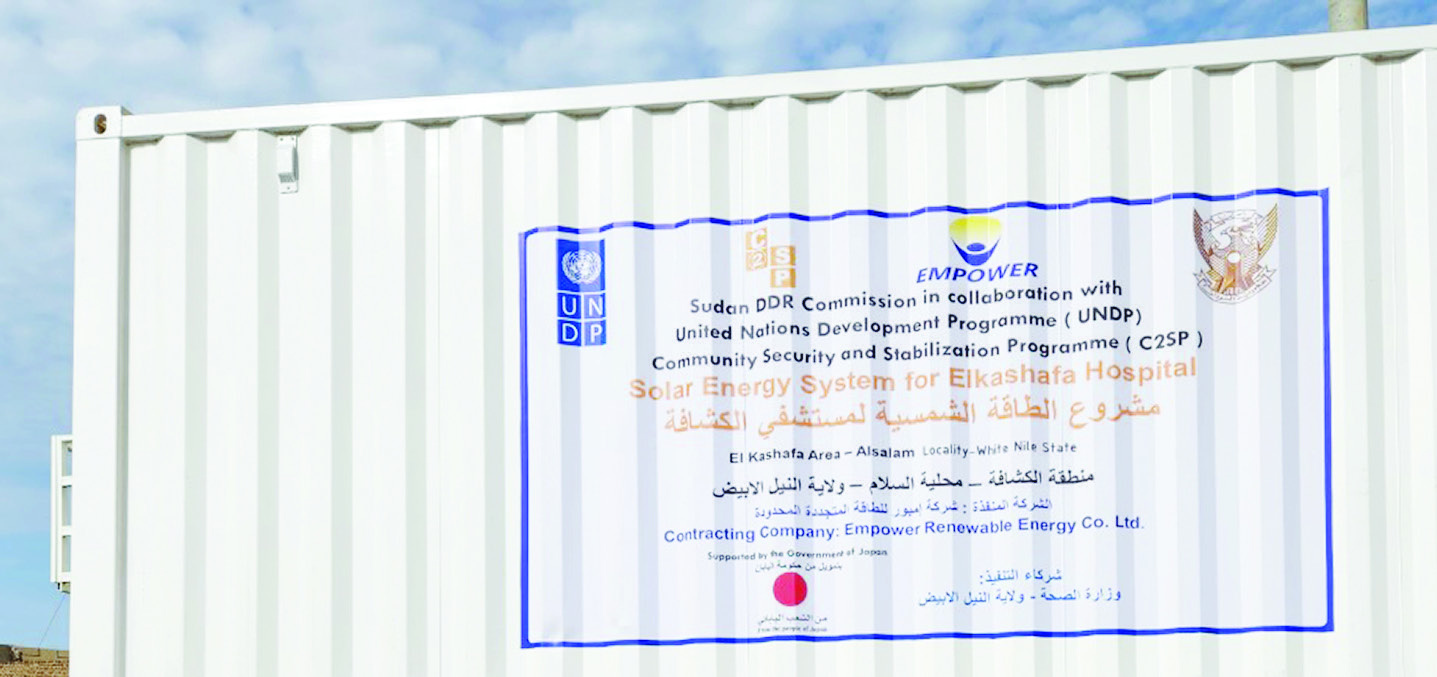
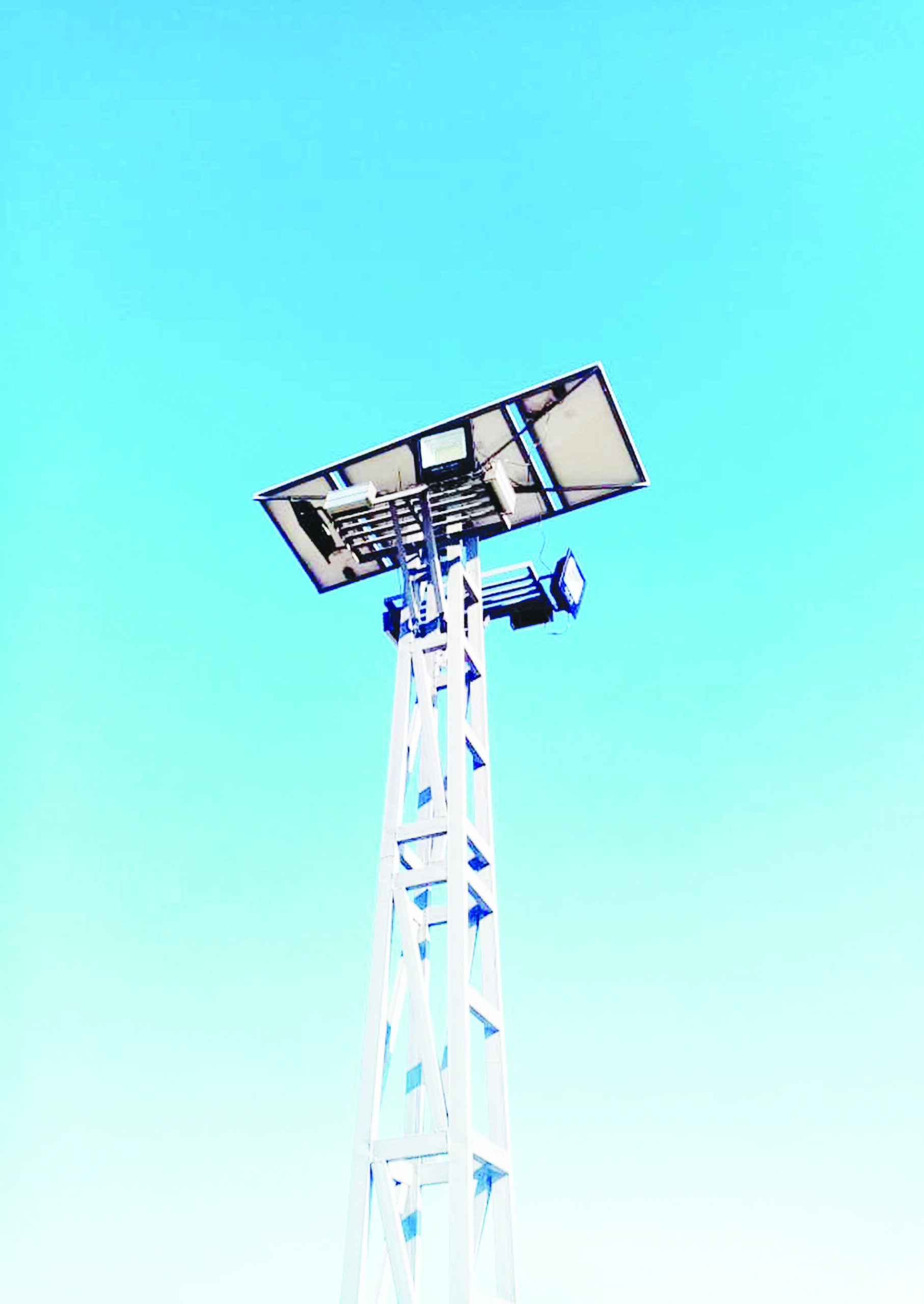
Since establishing our EPC department, we have delivered a diverse portfolio of projects. The most interesting one would be the delivery of 400 streetlights and floodlights in the form of lighting towers to benefit for a population of over 120,000 refugees in Gedaref. The results were tremendous. You could see the impact immediately. Neighborhoods that normally went idle after dark were finally engaging in activities after dark. Children could study and play games under the lights, women felt safer moving around the camps, and a host of economic activities emerged after sunset such as kiosks, shops and night-time markets. Some of our other favorite projects include a round- the-clock solar and battery system for hospital in Kosti, over 65 irrigation pumping systems in River Nile State and a turnkey water pumping solution for a mining client in Wadi Halfa. We now have an EPC footprint in 12 of Sudan’s 17 states and we plan to continue expanding this geographical footprint.
In the next 10 years we will continue to expand our reach nationally as we roll-out new products with our partners, particularly with LONGi, targeted at the Sudanese consumer. We believe we will reach all 17 states within 2 years. As we expand our reach, we will continue to Empower our sub-distributors, subcontractors, and agents to expand their own businesses in rural areas. We strongly believe in our partners’ importance to the realization of the energy access goals in Sudan. By 2024, we also aim to be the first medium-size Sudanese Renewables Independent Power Provider (IPP), whereby we aim to tackle the affordability issue for offtakers by selling energy on a contractual basis instead of selling renewable energy solutions on an upfront cost basis. We aim to also expand further through partnerships in neighbouring countries. We expect LONGi to dominate the South-Sudanese market in the next 2 years and we aim to further expand into Chad, Central African Republic, Eritrea, and parts of Ethiopia. Our aim is to become a major regional player leading the energy transition in East-Africa with an ever-expanding footprint and network of agents in the next 10 years.
Sudan Business Magazine